
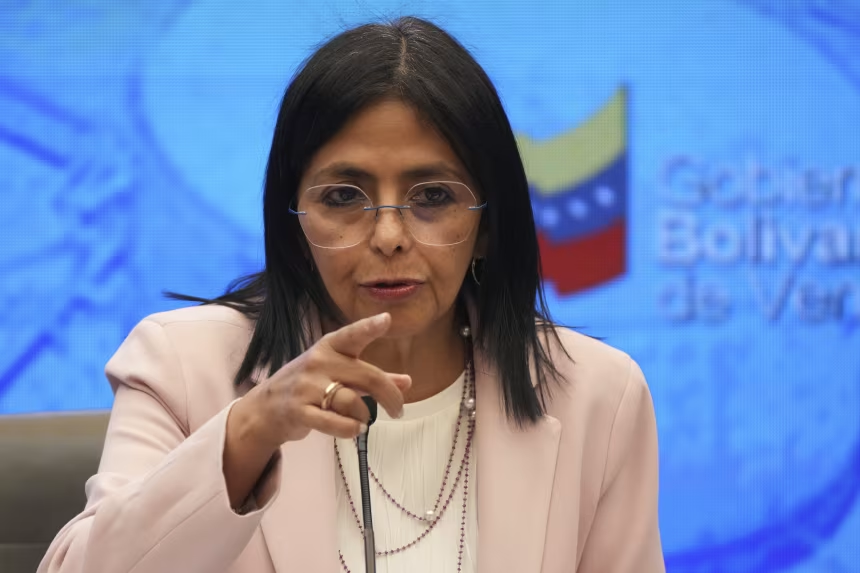
After the capture of President Nicolás Maduro during a U.S. military operation in Venezuela, executive authority has shifted to Executive Vice President Delcy Rodríguez.
Under Venezuela’s constitution, Articles 233 and 234 dictate that when a president is either temporarily or permanently unable to serve, the vice president assumes presidential responsibilities. In line with this provision, Rodríguez formally stepped into the role on Saturday afternoon. Just hours after Maduro and his wife, Cilia Flores, were detained, she convened a meeting of the National Defense Council, calling for their “immediate release” and condemning the U.S. action.
Standing before the Venezuelan flag, Rodríguez said the operation represented a serious breach of international law and national sovereignty, urging both Venezuelans and regional governments to denounce it.
“We call on the peoples of our great homeland to remain united, because what was done to Venezuela can be done to any nation,” she said during an address broadcast on state television, VTV. “The brutal use of force to bend the will of the people can be imposed anywhere.”
A trusted ally of Maduro
Rodríguez, 56, was born in Caracas and studied law at the Central University of Venezuela. For more than two decades, she has been one of the key figures of chavismo — the political movement founded by Hugo Chávez and led by Maduro since 2013.
Alongside her brother, National Assembly president Jorge Rodríguez, she has held several high-level roles. She served as minister of communication and information (2013–2014) and later as foreign minister (2014–2017), where she defended Maduro’s administration against allegations of authoritarianism and human rights abuses on the international stage.
In 2017, she was appointed president of the Constituent National Assembly, which expanded government powers following the opposition’s 2015 electoral victory. Maduro named her vice president in 2018, and she retained the role into his third term, which began on January 10, 2025. Until Maduro’s capture, Rodríguez also oversaw economic policy and served as minister of petroleum.
Opposition leaders insist the 2024 presidential election was fraudulent and maintain that former ambassador Edmundo González Urrutia was the legitimate winner — a position backed by several regional governments.
Constitutional lawyer José Manuel Romano told CNN that Rodríguez’s political trajectory underscores her influence and the confidence Maduro placed in her.
“She is a highly capable operator with strong leadership skills,” he said, noting her sway across the government — including within the Defense Ministry — is especially significant at this moment.
Signals — and skepticism — about Washington
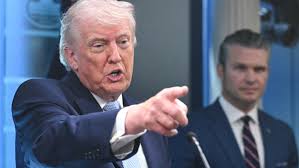
Following Maduro’s capture, U.S. President Donald Trump said Secretary of State Marco Rubio had spoken with Rodríguez, suggesting she appeared open to cooperation with Washington.
However, analysts doubt she will readily compromise. Imdat Oner, a policy expert with the Jack D. Gordon Institute, described her as one of the government’s most hard-line figures and suggested any transition role she plays could be part of an emerging post-Maduro arrangement.
Despite speculation, Rodríguez showed no indication of softening her stance. In interviews and public appearances, she demanded proof that Maduro and Flores are alive, condemned the U.S. operation — and insisted Maduro remains Venezuela’s rightful leader.
“There is only one president in this country, and his name is Nicolás Maduro Moros,” she declared — now the most prominent face of the Venezuelan government amid an uncertain political transition.



Leave a Reply